Why Won't My Chronic Anxiety Stop? The Answer Isn't "Why"
Chronic anxiety has a cruel sense of timing. It shows up on a good day, in the middle of an ordinary afternoon, right after you finally let your guard down. Then it hits like a ton of bricks, and your mind starts sprinting for an explanation it can't find.
If that's you, hear this first: nothing in you is broken. Something in you is asking to be met.

When anxiety hits, it’s not always a problem to solve, but an experience to embrace.
What Chronic Anxiety "Out of Nowhere" Actually Is
A man I work with sent me a message recently that I've heard in a hundred different forms.
He said he keeps getting anxious and doesn't know why. He'd noticed before that it can be a delayed reaction. But lately it's been happening so often that he isn't sure anymore. He described the moment after something terrible happens. You move on. You stop thinking about it. You feel normal again. Then suddenly you remember, and it lands like a ton of bricks.
"I get this all the time now," he wrote. "Seriously, why?"
That question, why, is the one almost every high-functioning man asks first. It's also the question that keeps him circling.
Here's what's actually happening. Anxiety that seems random is rarely random. It is your body responding to something your conscious mind hasn't caught up to yet. Or it's something your mind already moved past while your nervous system is still processing it.
This is not a character flaw. It isn't weakness, and it isn't proof that the integration work isn't working. It's a pattern with roots, and those roots live below the level of thought.
Why Does Anxiety Come Out of Nowhere?
Anxiety often seems to come out of nowhere because your body registers and responds to cues before your conscious mind does. A sound, a smell, a tone of voice, even something as ordinary as a delivery truck can touch an old association stored in your nervous system. The mind has moved on, but the body is still responding. The feeling arrives without the story attached.
Your Body Keeps Its Own Time
Your nervous system doesn't run on your calendar. It holds what somatic and trauma theory calls implicit memory: experience that was never put into words and lives in the tissues, the breath, and your reflexes.
When something in the present resembles something unresolved from the past, the body reacts first. Tight chest. Clenched jaw. A buzzing in the belly. Your thinking mind shows up a few seconds, or a few hours, later and asks, "What's wrong with me?"
Nothing is wrong. Your system is asking for presence.
The Shadow Is Knocking
Carl Jung described the shadow as the parts of ourselves we exiled in order to survive. That includes the emotions we weren't allowed to feel, the needs that weren't met, and the truths we learned to hide.
The shadow is not evil. It's unfinished.
When that exiled material gets close to the surface, the system reads it as danger, and anxiety is often the first signal. That's why I tell every man I work with that in the work of transformation, shadow work is not a choice. It's a promise. When you commit to growth, what's been buried will start knocking. Chronic, seemingly random anxiety is often that knock.
Why Asking "Why" Keeps You Stuck
Watch what your mind does the moment anxiety hits:
"Why am I anxious?"
"What caused this?"
"What was I just thinking about?"
"What does this mean?"
Asking why is usually the ego's first move. It gives the ego a mystery to solve, and solving mysteries keeps you safely upstairs in your head, far away from the feeling itself.
In my Ego Protection Cycle framework, this is the protection phase doing its job. The ego's mandate is simple: don't let the pain be felt again. Analysis is one of its favorite tools, because a man who is busy figuring something out never has to feel it.
This is one of the quietest ways men end up sabotaging their own growth. They aren't avoiding the work. They're doing the work in the one place it can't land.
What Chronic Anxiety Is Really Costing You
Let's be honest about what living this way costs, because most successful men have gotten very good at not looking.
When anxiety shows up unannounced and you meet it with interrogation, you start living in a low-grade state of vigilance. You scan for threats. You manage your inner world like a crisis you're always one step from losing control of.
That costs you in specific ways:
Presence. You're at dinner with your family, but part of you is upstairs running diagnostics.
Leadership. Decisions come from contraction instead of clarity.
Intimacy. It's hard to let someone close when you're braced against your own body.
Aliveness. Over time, many men numb out entirely rather than risk being ambushed again.
And here's the deepest cost. When anxiety becomes the enemy, every practice that might help becomes a tool for making it go away. Breathwork turns into a fire extinguisher. Meditation turns into an escape hatch.
The anxiety senses it's being rejected, so it comes back louder.
The Way Through: Somatic Integration, Not Interrogation
This is where the real work begins, and it's simpler than your ego wants it to be.
Not Why. What.
Change the question. Instead of why am I anxious, ask: What am I feeling in my body right now? Where is it? What does it actually feel like?
"Why" sends you upstairs into the story. "What" brings you downstairs into the body, which is where the anxiety lives and the only place it can actually move.
You may never know what activated it. That's okay. You don't need the story in order to meet the feeling.
A Practice for the Next Time It Hits
The next time anxiety shows up without an obvious reason, try this:
Drop the hunt. Notice the urge to find the cause, and let it go for now.
Locate it. Chest? Belly? Throat? Shoulders? Find where it actually lives.
Describe the sensation, not the story. Heat, tightness, buzzing, heaviness, pressure. Use plain words.
Breathe into it. Slow diaphragmatic breaths, with the exhale a little longer than the inhale.
Stay. Give it your full attention without demanding that it leave.
Let meaning come later, or not. Sometimes insight arrives on its own. Sometimes it doesn't, and you didn't need it.
Step five is where most men quietly sabotage the practice. They breathe at the anxiety and wait for it to disappear. When it doesn't, they decide the practice failed.
But that was never the goal.
Presence is the metric of success. Not comfort.
We aren't breathing so the anxiety will hurry up and leave. We're teaching your nervous system something it may never have learned: when something inside you calls for your attention, you stay.
That is somatic integration. Each time you stay, your system gathers evidence that what you feel is survivable, and it starts to loosen its grip.
Meet the Baby
Picture a baby crying in a crib. You don't stand over it and demand, "Why are you crying? I need the complete origin story before I can hold you."
The baby is crying. You pick it up.
Your anxiety is the same kind of signal: a part of you that needs to be held, not cross-examined. Meet it first. Understanding, if it comes, follows contact rather than leading it.
Why You May Be Noticing It More
If you've started doing inner work and suddenly feel more anxious, don't panic. That doesn't automatically mean you're getting worse.
When you deliberately become more sensitive to your inner world, you start registering signals that were always there underneath the noise, the busyness, and the numbing. Increased awareness can feel like increased anxiety at first. What's really changed is that you're finally present enough to notice.
What Becomes Possible

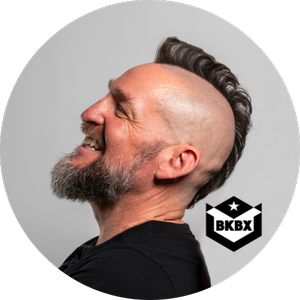
BreakBox founder, Zachary Pike Gandara
I won't promise you a life without anxiety. Anyone who promises that is selling you a story.
Here's what I can tell you, because I've lived it and watched man after man walk through it.
When you stop interrogating your anxiety and start meeting it, the relationship changes. The waves still come, but they move through instead of taking over. You stop living braced, and the energy you spent managing your inner world comes back to you.
That energy shows up as creativity, clarity, patience with your kids, and the ability to stay steady when the people around you aren't. You become the kind of man whose calm isn't suppression and whose strength isn't force.
You don't become someone who never gets knocked down. You become someone who knows how to come home to his body every time.
That's what self-mastery actually is. It isn't control. It's the capacity to stay present when the tide goes out, and to trust that it will come back in.
Frequently Asked Questions
Why does anxiety come out of nowhere?
Anxiety often appears to come out of nowhere because the body responds to cues before the conscious mind recognizes them. A sound, smell, place, or tone of voice can touch an old association stored in the nervous system. Your thinking mind may have moved on while your body is still processing. The feeling arrives without the story, which makes it seem random when it usually isn't.
Why can't I get rid of my anxiety?
Many people can't get rid of chronic anxiety because they treat it as an enemy to eliminate. When anxiety is resisted, analyzed, or numbed, the nervous system reads that as more danger, and the signal often gets louder. Lasting change tends to come from meeting anxiety with presence: locating it in the body, breathing with it, and staying with it. Somatic integration works with anxiety instead of against it.
Is it normal for anxiety to increase during shadow work or healing?
Yes, it's common. As you become more aware of your inner world, you start noticing sensations and emotions that were previously buried under busyness or numbing. Shadow material also tends to surface once the nervous system feels safe enough to release it. More anxiety at the beginning often reflects more sensitivity, not more damage.
What is somatic integration for anxiety?
Somatic integration is a body-based approach to processing emotion and stored stress. Instead of trying to think your way out of anxiety, you locate it in the body, describe the physical sensations, and use breath and attention to stay present with it. Over time, this teaches the nervous system that difficult sensations are survivable, which reduces their intensity and grip.
Should I stop asking why I feel anxious?
Not forever, but not first. Asking "why" in the moment usually pulls you into analysis and away from the feeling, which keeps the anxiety stuck. Ask "what am I feeling and where" first. Understanding often comes on its own once the body has been met, and sometimes it isn't needed at all.
When should I get professional help for chronic anxiety?
If anxiety comes with panic attacks, chest pain, or trouble functioning at work or home, it’s important to seek an aligned partnership for assistance. The same applies if anxiety comes with thoughts of harming yourself. Somatic and integration work can be a powerful complement to that care, but it isn't a substitute for medical support when you need it.
You Don't Have to Keep Bracing Against Yourself
If you're done living upstairs in the head, analyzing every wave of anxiety and waiting for the day it finally stops, there's another way to do this.
In our self-mastery mentorship, we work with the breath, meditation, and body-based integration practices that teach your nervous system to stay present with what it's been running from.
Fill out the application and book your assessment, and let's find out what your anxiety has been trying to tell you.
Your body has been asking you to come home. It's time to answer.
Let’s do it together,

Zachary Pike Gandara
𝕻𝖊𝖗 𝖙𝖊𝖓𝖊𝖇𝖗𝖆𝖘 𝖆𝖉 𝖑𝖚𝖒𝖊𝖓 🕯️
Through darkness, into light.