Trauma Healing Is a Lie. Why Integration Changes Everything.
You've spent years on the healing journey. More books. More modalities. More practitioners who see you clearly for sixty minutes and then hand you back to your life unchanged. And somewhere underneath all of it, a quiet voice you keep silencing has been asking the same question: why am I still here? Why haven’t things changed?
Trauma healing, as it's sold to you, is a lie. Not because the people selling it are villains — most of them believe it too. But because the framework itself keeps you seeking instead of arriving. The truth is simpler and harder: trauma doesn't heal. It integrates. And that changes everything.
The Problem Named Clearly
Here's what's actually happening when you can't stop chasing your own wholeness.
You were told there's a destination called "healed." A version of you with no triggers, no shadow, no ache. So you go looking for it. And every time you don't arrive, you assume you need one more thing — one more retreat, one more coach, one more sound bath, one more breakthrough.
The seeking isn't a sign you're close. It's the pattern itself, wearing a psychological or spiritual costume.
This is not a character flaw. You're not broken for chasing. Your nervous system learned a long time ago that if you just do more, you'll finally be safe. So it took that survival strategy and pointed it at your inner work. The same drive that made you successful in sales, in business, in leadership — the relentless more — is now running your healing.
And the wellness industry has noticed. It has built an entire economy on your seeking. Need, need, need. Consume, consume, consume. Another course. Another card pull. Another modality that feels good in the moment and dissolves by Tuesday.
Emotional release is human. It feels real because it is real. But release is not repair. Feeling something is not the same as being free of it.
Why This Keeps Happening
Go deeper with me, because the surface answer isn't the real one.
“Neuroscience research shows that the only way we can change the way we feel is by becoming aware of our inner experience and learning to befriend what is going inside ourselves.”
― Bessel A. van der Kolk, The Body Keeps the Score: Brain, Mind, and Body in the Healing of Trauma
Trauma lives in the body. Not as a memory you can talk your way out of, but as a pattern held in the nervous system — a set of protections your younger self built when the world wasn't safe. Those protections are not the enemy. They kept you alive. They are, in the truest sense, loyal.
What you call your wound is actually a part of you still standing guard at a door the danger already left.
The mind wants to fix this. To analyze it, understand it, insight its way to freedom. But the body doesn't speak in insight. You cannot think your way out of something you learned before you had words. This is why so many brilliant, self-aware people stay stuck — they've read every book about the room they're trapped in and still can't find the way out.
Here's the part almost no one says out loud. The "healing journey" gives the ego a job. And the ego loves a job. It would rather stay busy improving itself forever than risk the one thing it's genuinely afraid of: meeting the exiled parts of you it has spent your whole life keeping in the dark.
Shadow isn't evil. Shadow is everything you disowned to be acceptable — your rage, your want, your grief, your fire. You didn't lose those parts. You buried them. And a buried thing doesn't die. It runs your life from underground.
The seeking keeps you at the surface. It is, quietly, a very sophisticated form of avoidance.
What This Is Actually Costing You
Let me be honest with you, the way I'd want someone to be honest with me.
Every year you spend on the treadmill of healing is a year you don't spend living from your integrated self. And the cost isn't abstract. It shows up at the dinner table. It shows up in your marriage. It shows up in the moments your kids needed you present and you were somewhere in your head, managing yourself.
The parts of you that you refuse to integrate don't disappear. They leak. They leak into how you lead — the control, the reactivity, the inability to trust anyone with the real weight of the thing. They leak into your relationships as the wall you keep behind your charm. They leak into your body as the tension you've stopped noticing because it's been there so long you think it's just you.
You've built a life that looks like power. And underneath it, a part of you is exhausted from holding a performance you can't put down.
This is the real bill. Not the money you've spent on coaching, though that adds up. The cost is aliveness. The cost is the capacity to be fully met — to love and be loved without the guard rail up. You cannot receive what you won't let anyone see.
I'm not telling you this to shame you. I'm telling you because you already feel it, and you deserve to hear someone name it plainly.
The Way Through: Integration, Not Healing
So here's what actually breaks the pattern. Not more seeking. Integration.
Integration means you stop trying to get rid of the parts of you that hurt, and you bring them home instead. You turn toward the guarded, exiled, disowned material — not to fix it, but to feel it, to know it, to let it finally be witnessed by the adult you've become. And when a part is truly met, it stops running its cycle. It softens. It hands you back the energy it's been spending on protection.
This is why I don't call it healing. Nothing is being repaired, because nothing was broken. What's happening is remembering. You're remembering who you were before the world told you who to be. The kid you were before trauma, culture, religion, and other people's fear taught you to shrink your fire and hide your want.
The work is somatic because the wound is somatic. You have to come down out of the head and into the body, where the pattern actually lives. And the body doesn't respond to force. It responds to safety, to slowness, to presence.
Let me give you a real entry point. Not a teaser — an actual place to start.
The next time you feel the familiar pull to seek — to buy the thing, book the session, chase the next fix — pause. Put a hand on your chest or your belly. And instead of doing something, ask the sensation underneath the urge one question:
What are you protecting me from feeling right now?
Then don't answer it with your mind. Wait. Let the body respond. Usually there's a feeling right beneath the seeking — grief, fear, loneliness, want — that the seeking exists to keep you from touching.
The seeking is the lid. The feeling is the door. You don't need another practice. You need to stay, for thirty seconds longer than is comfortable, with what the practice was helping you avoid.
That's integration. It's not glamorous. It won't sell you a certification. But it's the thing that actually moves the pattern, because you're finally meeting what was underneath it all along.
What Becomes Possible
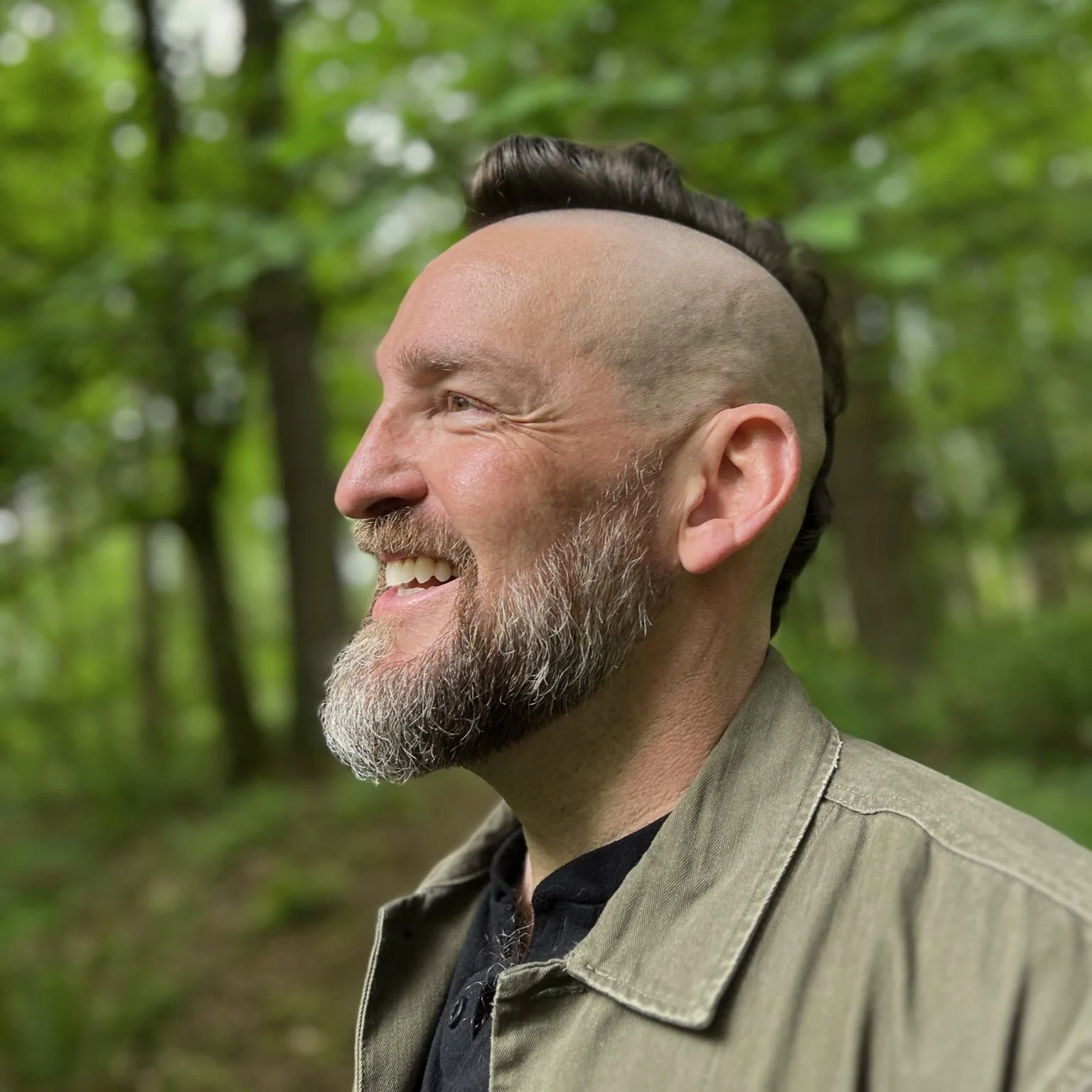
BreakBox Founder, Zachary Pike Gandara
I want to be careful here, because this is where most content lies to you with positivity. So let me tell you what's actually on the other side — not perfection, but something better.
A man who has done this work still gets triggered. The difference is he no longer gets hijacked. There's a half-second of space between the stimulus and his response, and in that space, he chooses. That space is everything. That space is what people mistake for calm, but it's actually integrated power.
He stops managing himself and starts inhabiting himself.
He can hold the hard conversation without armoring. He can be told he's wrong without collapsing or attacking. He can want something — sex, success, rest, closeness — without apology and without grasping, because his desire is no longer tangled up with an unmet need he buried at seven.
His leadership widens. He's not leading from the fear of being found out anymore, so he can be steady when everything around him isn't. People feel safe with him — not because he's soft, but because he's whole. He's integrated the fire instead of fearing it, so it warms the room instead of burning it.
And in his relationships, the wall comes down. He can be fully seen. He can let his partner all the way in, because there's no longer a buried self he has to keep guarded. That's the aliveness you've been paying to get back. It was never for sale. It was always underneath.
Frequently Asked Questions
What is the difference between trauma healing and trauma integration?
Trauma healing implies a wound gets repaired and disappears, which keeps you seeking a finish line that doesn't exist. Trauma integration means bringing the protective, exiled parts of yourself back home so they stop running your patterns unconsciously. Nothing is erased — it's metabolized. The result is more lasting than healing because you're not trying to delete part of your history, you're reclaiming the energy it was holding.
Does trauma ever fully heal or go away?
Trauma doesn't vanish — it lives in the nervous system as a set of learned protections. But it can be integrated so completely that it stops driving your reactions, relationships, and choices. You move from being run by the pattern to having space and choice around it. That freedom is real, even though the memory remains.
Why does shadow work matter for trauma integration?
Shadow work is how you meet the parts of yourself you disowned to stay acceptable — your anger, grief, desire, and fire. Those buried parts don't disappear; they run your life from underground until they're integrated. Turning toward them consciously is what breaks the cycle. Without shadow work, you stay stuck managing symptoms while the root keeps operating unseen.
How does nervous system regulation fit into all of this?
Trauma is held in the body, not just the mind, so real change has to happen at the nervous system level. Regulation — slowness, safety, presence, somatic awareness — is what allows buried material to surface and integrate without overwhelm. You can't think your way out of a body-based pattern. You have to feel your way through it, and a regulated nervous system is what makes that possible.
Is coaching or therapy a waste of money then?
No — the issue isn't the support, it's the framework of endless seeking. Good work moves you toward integration and your authentic Self, not toward permanent dependence on the next fix. The question to ask is whether your work is helping you arrive, or quietly keeping you on the treadmill. Real integration work should make you need it less over time, not more.
This Is the Work
You don't need more information. You've read enough. You need to stop seeking long enough to meet what the seeking has been protecting you from — and you shouldn't do that part alone.
That's what we do inside BreakBox. Not another modality to add to the pile. The actual work of integration — going beneath the pattern, meeting the exiled parts, and remembering who you were before the world told you to shrink.
If something in you recognized itself while reading this, that's not an accident. That's the part of you that's ready.
Fill out the application and book your assessment and let's find the part of you that's ready to stop protecting the life that's asking to die.
With you through the integration,

Zachary Pike Gandara
𝕻𝖊𝖗 𝖙𝖊𝖓𝖊𝖇𝖗𝖆𝖘 𝖆𝖉 𝖑𝖚𝖒𝖊𝖓 🕯️
Through darkness, into light.

“When the student is ready the teacher will appear. When the student is truly ready... The teacher will Disappear.”